Waberer's: how drivers' phones became verifiably company-controlled devices
Data allowances running out, settings changed, communication breaking down: how the driver phone became a controlled company device.
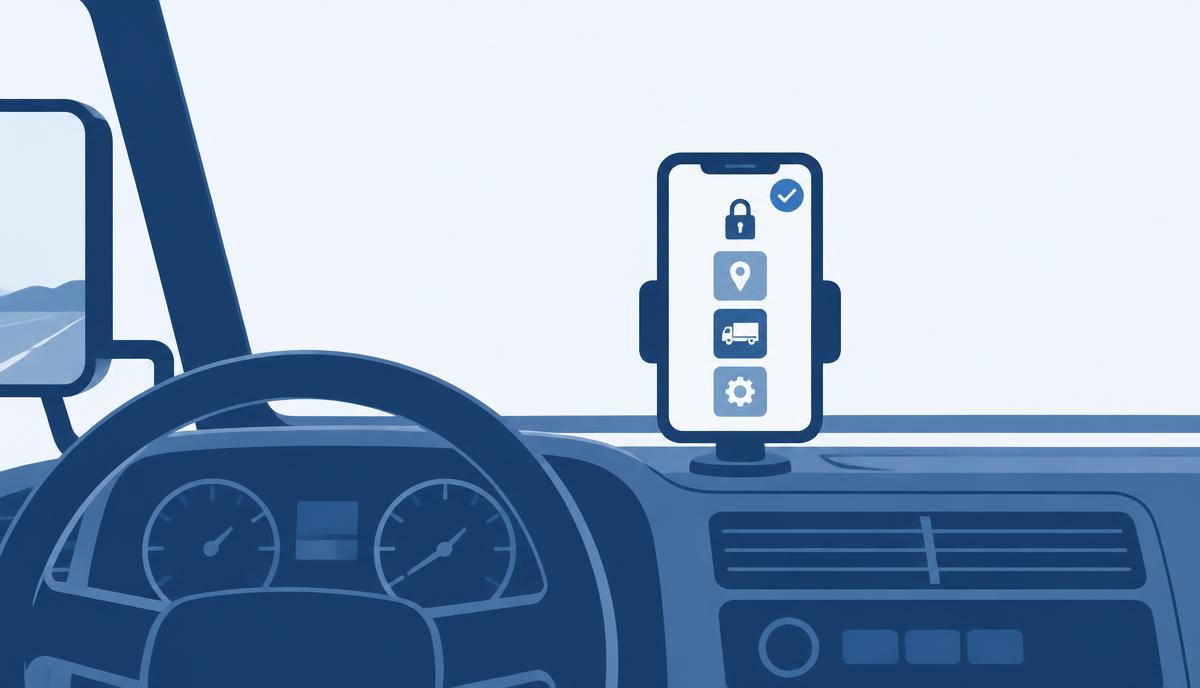
In the fleet of Waberer's International Kft., the driver phone was originally meant to be a dedicated work tool: it receives messages from the transport planner, the driver submits the CMR with it, and daily jobs come through it. In practice, however, a smartphone is designed to be used for anything – and if nothing defines what it is used for, it will be used for anything. This article explains why that was a real risk, and how the driver phone became a verifiably company-controlled device.
The starting point: a device nobody could vouch for
On some phones in the fleet, up to 10 GB of mobile data was used within a few days – on browsing, TikTok and YouTube. At first sight that is a cost issue, but in reality it is more: the use of the device had slipped out of the company's control.
Three risks on one phone
- Cost: the monthly allowance could run out in a few days, with roaming charges on top in international traffic.
- Operations: without data, the driver cannot send the CMR, does not receive the next job and cannot coordinate. In extreme cases, communication on a single phone could stop for weeks – meaning delays and the risk of contractual penalties.
- Unauthorised changes: if drivers can reach the system settings, they may accidentally change a SIM setting, a notification or a permission. Then the phone walkthrough begins, which can take minutes or even half an hour.
The common denominator: the company could not tell what state a given phone was in, and could not ensure that the functions needed for work were available when they were needed.
Why a policy is not enough
Every fleet starts with a policy: no personal use, the phone is for work. That matters, but on its own it does not work, because there is no technical restriction behind it. The problem is not the driver's intent; it is that the device does not distinguish work from personal use. A systemic problem needs a systemic answer.
The solution: a dedicated work device with central policies
After central device management was introduced, the driver sees a single screen. It offers the apps needed for work (transport planner and client apps, CMR submission), plus calls and text messages. Blocked are:
- YouTube and TikTok,
- the browser,
- the system settings menu,
- every other app unrelated to work.
This is no longer a written rule but a technical restriction: a blocked app does not open, and the settings menu cannot be reached.
What can also be managed centrally
- Installing and updating apps across the entire fleet – both apps from the public app store and custom apps developed for clients. Updating the latter used to be a manual task, driver by driver.
- Remote troubleshooting: if an app does not load or CMR submission fails, support connects to the phone remotely and fixes it – the phone does not need to be brought to the depot.
- Policy-level settings: what is allowed and what is not, for whom and on which phone.
What became verifiable?
From a device protection point of view, the most important change is that the state of the phone became known. If the same policy runs on every device, there is no need to assume what it is used for – it follows from the configuration. Most root causes of problems (data used up, settings changed, missing or outdated apps) can no longer arise technically.
According to the source, the results were:
90% of the manual configuration tasks related to driver phones were eliminated, and several FTEs were freed up from the process.
- Monthly data traffic fell by orders of magnitude: the phone returned to its original purpose, with no more than a few tens of megabytes a day, so data is available at the critical moment even with a smaller plan.
- Job delays caused by phone problems disappeared from the incident statistics.
- The three-year total cost of rollout and operation paid for itself within a few months.
Lessons for other fleets
The Waberer's case shows that mobile device protection is not only about lost phones. It is just as important that a company device can only be used for its intended purpose, that its settings cannot be changed by accident, and that its state can be verified at any time. When these conditions are met, cost, operational risk and unauthorised use all go down together.
It is worth considering if your fleet:
- has more than thirty company phones and manual handling no longer scales,
- regularly needs client apps installed and updated,
- has already had delays caused by phone communication failures,
- loses visible IT or dispatcher time to troubleshooting.
If you would like to discuss what this would look like for your company devices, get in touch – we will show you which policies and restrictions fit your fleet.